Key Takeaways
- Skin ulcers often stall in the healing process because of inflammation, poor circulation and biofilms.
- Conventional care (cleaning, dressings, compression) is essential but may not fully restart healing.
- Calendula, gotu kola, Pycnogenol® and Aloe vera have the strongest clinical evidence for ulcer healing.
- Ribwort, agrimony, horsetail and slippery elm are supportive herbs with a long history of use.
- Comfrey and arnica shouldn’t go on open ulcers. Comfrey has research that supports use on minor grazes, with a PA-free preparation; arnica never touches broken skin.
- Herbs work best as part of an integrated approach, not as a replacement for medical treatment.
- Product quality and safe application matter. Patch test new topical herbs before use.
- Personalised advice from a medical herbalist helps ensure safe and effective choices.
Living with a Stubborn Skin Ulcer
Living with a skin ulcer is not something to take lightly. A venous leg ulcer isn’t a cut that closes in a week or two. It’s a chronic wound, often lasting months and sometimes years. Alongside the pain, swelling and itching, an ulcer drains your energy and disturbs your sleep. Everyday things like getting dressed, walking or resting at night become harder.
The impact goes beyond the wound itself. A sore that never seems to heal is frustrating and wearing. It affects mood, mobility and daily routines. That’s why safe, effective treatment matters so much.
Conventional medicine offers real support, from dressings and compression bandages to antibiotics when needed. But these measures often manage the wound rather than restart the healing. Many people are left wondering whether anything else can help the body recover.
Herbal medicine has something to add here. Herbs have been used for centuries to soothe sore skin and encourage repair. Research is now confirming what herbalists have long observed. Some plants contain compounds that help wounds close.
What Exactly Is a Skin Ulcer?
A skin ulcer is an open sore that forms when the top layers of skin break down and fail to heal. Instead of closing within weeks, the sore stays open and can grow larger or deeper. Venous leg ulcers are one of the most common types. They usually develop when the veins in the legs stop working properly. Blood pools in the lower legs, and the pressure builds.
Because of this, a venous ulcer can take many months to heal. The surrounding skin often becomes red, swollen or itchy. Ulcers may ooze fluid and can be painful, making it hard to walk or rest comfortably. Over time, the constant strain leaves people feeling run down.
Other types include diabetic foot ulcers, caused by high blood sugar damaging circulation and nerves. Pressure ulcers form when someone sits or lies in one position for too long. All skin ulcers have one thing in common. They place a heavy burden on the body and need careful, ongoing care.
For many people, an ulcer isn’t just a skin problem. It affects overall health and quality of life. That’s why it helps to understand both the medical and the natural ways to support healing.
Standard Medical Care Helps, but It Has Limits
Conventional treatment for skin ulcers is important and often essential. The main approach is to keep the wound clean and protected with dressings. Compression bandages or stockings can improve circulation in the legs. These measures manage the wound environment and can ease discomfort.
Sometimes antibiotics are given, as a cream or as tablets. They’re useful when there’s a clear infection. But ulcers often harbour bacteria without being infected. In those cases antibiotics may not be needed, and overuse feeds antibiotic resistance. Antibiotics also do little to stimulate the body’s own repair.
One of the biggest challenges in ulcer care is biofilm. Biofilms are slimy layers that bacteria build on the wound surface. They shield bacteria from antibiotics and from the immune system. They also hold the wound in a state of chronic inflammation, which blocks proper healing. This is one reason some ulcers fail to improve despite months of standard care.
Dressings, compression and antibiotics all have their place. But they often manage the wound rather than tackle why it has failed to heal. That gap has led many people, and researchers too, to look at whether herbs can add support.
Why Herbal Medicine Has a Role to Play
Herbal medicine has a long history in wound care. Traditional healers used plants described as vulnerary, meaning they support the healing of damaged skin and tissue. These herbs were applied as poultices, ointments or washes. Many are still valued by herbalists today.
What’s changing is the scientific attention they’re receiving. Researchers are beginning to confirm what practice has shown for centuries. Many plants contain compounds that calm inflammation, act against bacteria, and stimulate new tissue growth. A systematic review of seven clinical trials found plant preparations showed promise for venous ulcer healing, though the trials were small.
Herbs aren’t a quick fix, and they work best within a wider care plan. Good nutrition, circulation support and proper wound care remain essential. Herbal remedies add an extra layer of support as the skin works to repair itself.
The growing interest in herbs is also linked to antibiotic resistance. Because herbs often act in several ways at once, they may help where antibiotics alone have failed. That’s especially relevant in wounds complicated by biofilms.
Why Some Ulcers Stall
The body has a natural process for repairing skin, but sometimes it gets stuck. A wound normally moves through four stages. First is clotting to stop the bleeding. Then inflammation clears debris and fights infection. Next, new tissue and blood vessels grow. Finally, the new skin slowly strengthens.
In a chronic ulcer, this cycle breaks down. The wound becomes trapped in the inflammatory phase. Inflammatory chemicals and enzymes flood the tissue and break down new collagen as fast as it’s made. The sore never builds the healthy base it needs to close.
Circulation problems are often at the root. In venous ulcers, blood pools in the legs, causing swelling and poor oxygen delivery. In diabetic ulcers, nerve damage and poor circulation make the skin fragile and slow to heal. Pressure ulcers develop when the same patch of skin is compressed for too long, cutting off the blood flow.
Then there are biofilms, the bacterial communities that live on chronic wounds. They protect bacteria from antibiotics and the immune system, keeping the wound irritated and unable to heal.
These obstacles explain why herbs may be so valuable. Many plants contain compounds that calm inflammation, support circulation, protect collagen, and disturb biofilms. By working on several levels at once, they can help restart a stalled wound.ng on several levels at once, they can help restart the stalled healing process.
Herbs with the Strongest Evidence for Healing Ulcers
Calendula (Calendula officinalis)
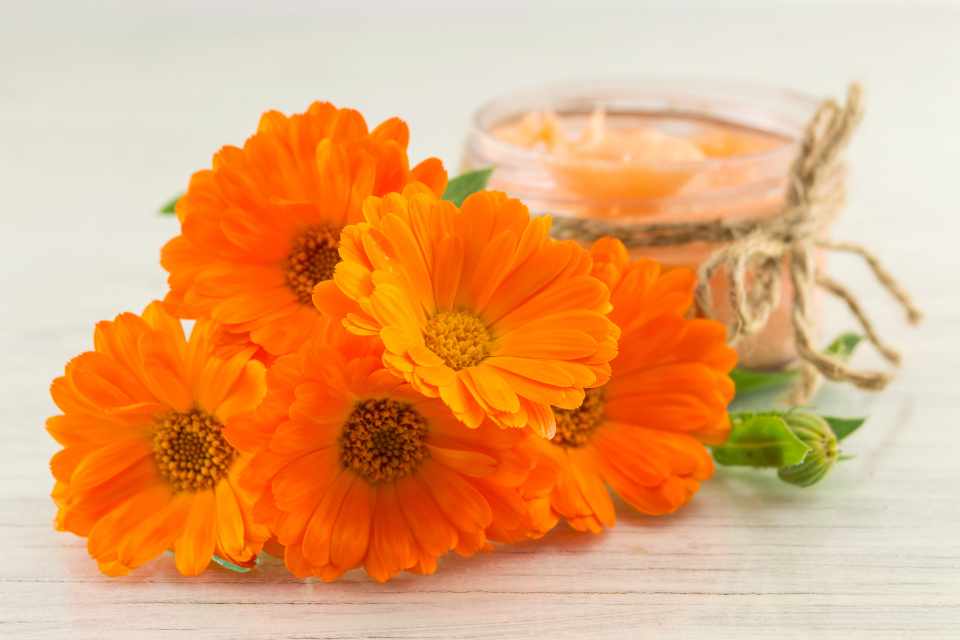
Calendula, also known as marigold, has been used for centuries on cuts, burns and inflamed skin. Its bright orange flowers contain compounds that calm inflammation, act against infection, and stimulate new tissue.
Modern research supports this traditional use. In one trial, people with venous leg ulcers applied a calendula extract twice a day. Treatment ran for up to 30 weeks. In that time, 72% of the calendula group healed completely, against 32% of the control group. Ulcers treated with calendula also closed at four times the weekly rate. Average healing time was around 12 weeks, against 25 weeks with standard care.
Calendula works in several ways. It encourages granulation tissue, the new connective tissue and blood vessels that fill a healing wound. It contains anti-inflammatory compounds that reduce redness and swelling. And it has gentle antiseptic properties that lower the risk of infection.
For home use, calendula comes as an ointment, cream or infused oil. Good products are made from the whole flower head, not just the petals. The resinous green base holds many of the healing compounds. Calendula is very safe for most people. If you’re allergic to plants in the daisy family, do a small patch test first.
Gotu Kola (Centella asiatica)
Gotu kola is a herb with a long history in Ayurvedic and Chinese medicine. Traditionally a tonic for skin and circulation, it’s now recognised worldwide for supporting tissue repair.
A systematic review of clinical trials found that gotu kola improved wound contraction and granulation. Its compounds stimulate collagen production, the protein that gives skin its structure and strength. These compounds also encourage fibroblasts, the cells that build new connective tissue, to multiply and get to work. The same review points to improved growth of new blood vessels, which matters wherever poor blood flow delays healing.
One trial in the review followed 170 people with diabetic wounds. Those taking capsules of asiaticoside, gotu kola’s main active compound, healed faster and scarred less than those on placebo.
Gotu kola is usually used as a cream, ointment or gel on ulcers and wounds. Newer preparations such as hydrogels are being developed to deliver its compounds more effectively. Topical use is safe for most people, though it occasionally causes mild irritation. A patch test is a sensible first step.
Taken by mouth, gotu kola can affect blood sugar and has mild sedative effects. Taken orally it’s best used under professional guidance. But, on the skin, gotu kola offers a gentle and effective way to encourage repair.
Pine Bark Extract (Pycnogenol®)
Pine bark extract, sold under the name Pycnogenol®, comes from the bark of the French maritime pine tree. It has been widely studied for its effects on blood vessels and circulation. That makes it a natural fit for venous leg ulcers, where poor blood flow is the core problem.
In a six-week trial, people who took Pycnogenol® capsules and also applied the powder to their ulcers healed faster than those on capsules alone. The ulcerated area shrank more quickly with the combined treatment.
Pycnogenol® works in several ways. It helps your blood vessels to relax, so that more oxygen and nutrients reach the wound. Its antioxidant activity protects fragile tissue from further damage. It reduces inflammation, helping the wound move past its stalled phase. It also binds to collagen and elastin, strengthening skin and vessel walls.
The best results in trials came from using it both by mouth and on the wound. The vein studies mostly used 150 mg a day in divided doses. The powder from capsules can be applied to a cleaned wound before dressing it. Use the standardised Pycnogenol® product, since research results can’t be assumed to apply to generic pine bark extracts.
Pycnogenol® is well tolerated, though a few people notice mild stomach upset or headache. Take advice first if you’re on blood thinners or have an autoimmune condition.
Aloe vera
Aloe vera gel is one of the most familiar herbal remedies for skin. The clear gel inside the fleshy leaves has soothed burns, rashes and inflamed skin for centuries. For ulcers, it offers comfort and evidence.
In one study, people with chronic leg ulcers added Aloe vera gel twice a day to their usual wound care. After three months, 93% of the Aloe vera group had healed, against 47% receiving usual care alone. Healing took around 31 days on average, half the 63 days seen in the control group.
Aloe vera calms inflammation, keeps the wound moist, and stimulates collagen and new skin cells. Its natural sugars and amino acids feed the repairing tissue, while its anti-inflammatory compounds calm the wound surface.
For best results, use pure inner leaf gel from a fresh leaf, or a good commercial gel with Aloe vera as the first ingredient. Avoid products with long filler lists or those made from dried powder. Don’t confuse the soothing inner gel with the yellow latex just under the leaf skin. The latex is irritating and shouldn’t be used.
Aloe vera is very safe on skin. Rarely, it causes mild irritation, so try a small patch first. Don’t apply it to heavily infected wounds full of pus, as it may trap bacteria under its protective layer. Used well, it’s a gentle and effective ally in skin repair.
You might also like my post: The Most Important Herb in my Kitchen
Herbs with Emerging or Supportive Roles
Ribwort Plantain (Plantago lanceolata)
Ribwort, a common plant of paths and lawns, has served for centuries as a soothing dressing for wounds and bites. The strongest trial evidence comes from its close relative, greater plantain (Plantago major). One randomised trial added a 10% greater plantain gel to usual care for diabetic foot and pressure ulcers. After two weeks, 64% of the gel group had healed completely, against 20% with usual care alone. Ribwort shares many of the same soothing compounds, and herbalists use the two similarly on skin.
You might also like my post: Plantain Herb Benefits for Skin, Throat and Gut
Agrimony (Agrimonia eupatoria)
Agrimony has a long folk history as a wound herb. In a laboratory and animal study, an agrimony extract strengthened healing wounds and encouraged the cells that rebuild skin. Human trials are still lacking, so its reputation rests mainly on long herbal practice, with early research beginning to add support.
Horsetail (Equisetum arvense)
Horsetail is rich in silica, which is a mineral important for connective tissue and collagen strength. In a trial of 108 women, a 3% horsetail ointment improved healing of a surgical wound after childbirth and eased pain over ten days. That was an acute wound rather than an ulcer, so the finding only travels so far. Horsetail remains a useful supportive herb for strengthening the tissue around wounds.
Slippery Elm (Ulmus rubra)
Slippery elm inner bark contains mucilage, a soothing substance that forms a protective layer over sore skin. It was traditionally used in North America for burns and wounds. Modern research is limited, but its long record of use reflects its gentle, protective qualities.
These herbs are best thought of as supportive options. They work alongside the more studied herbs as part of a personalised approach to skin healing.
Herbs to Avoid on Open Ulcers
Comfrey (Symphytum officinale)
Comfrey has a long reputation as a healing herb, often called knitbone for its use on fractures and tissue damage. It contains allantoin, a compound that encourages rapid cell growth.
For minor wounds, there is direct trial evidence. In a randomised trial of 278 people with fresh grazes, a 10% comfrey herb cream sped healing markedly. Wounds shrank at 49% a day, against 29% with a weaker cream. No skin reactions were seen over ten days. A review of the external evidence rates the abrasion findings as robust, and the same team found the same result in children.
The point to watch is comfrey’s pyrrolizidine alkaloids, compounds that can harm the liver once they reach the bloodstream. That risk is real, and it’s why comfrey is no longer taken by mouth. The trial cream was made from a cultivar which is free of these alkaloids. So on minor grazes, choose a preparation labelled PA-free or PA-tested, and keep use short.
Chronic ulcers are different. An ulcer means a large area of broken skin, treated daily for months, and no comfrey trial has tested that. Surveys of herbal practitioners rank ulcers among the highest-risk uses for comfrey. Until the evidence exists, keep comfrey off ulcers and use the herbs above instead. It still earns its keep on bruises, sprains and joint pain.
Arnica (Arnica montana)
Arnica is another familiar remedy, used to reduce bruising, swelling and muscle soreness after injury. It supports circulation and calms inflammation, which makes it effective for injuries where the skin is unbroken. But arnica should never be applied to broken skin. The same compounds that make it useful, particularly helenalin, can irritate and damage tissue if they enter through a wound.
Keep arnica for bumps, bruises and muscle aches where the skin is intact. It isn’t safe for ulcers or any open sore.
Using Herbs Safely and Effectively
The herbs here show that nature offers real tools for healing, even in slow and difficult wounds. Calendula, gotu kola, Pycnogenol® and Aloe vera now have clinical research behind them. Ribwort, agrimony, horsetail and slippery elm come mainly from a rich herbal tradition, with science beginning to catch up.
The key is not to treat herbs as replacements for medical care, but as partners with it. Compression therapy, proper dressings and wound hygiene remain essential. Herbs can work alongside these conventional treatments. They ease inflammation, soothe the skin, support your circulation and encourage tissue repair. This combined approach often works better than one method alone.
Quality matters too. Choose preparations from trusted sources, made from the right part of the plant, with minimal additives. A patch test is always wise before using a new topical product on delicate or damaged skin.
And everyone’s situation is different. What works for one person may not suit another, especially where other health conditions are in the mix. Personalised advice from a qualified practitioner is valuable here. If you’re struggling with a chronic ulcer, herbs may have something to offer. You’re welcome to book a free hello call with me to talk it through.
Final Thoughts
Skin ulcers can be stubborn and draining, but they aren’t hopeless. Combining good conventional care with safe, evidence-based herbal remedies creates the right conditions for healing. Herbs bring centuries of tradition together with modern insight.
The herbs with the strongest research, calendula, gotu kola, Pycnogenol® and Aloe vera, show that natural remedies have a clear role in wound care. Ribwort, agrimony, horsetail and slippery elm reflect long herbal tradition and can offer extra support. Just as important is knowing which herbs to keep off ulcers, comfrey and arnica among them, so treatment stays safe.
Healing is rarely the same for any two people. Your health, circulation and lifestyle all play a part. That’s why a personalised plan makes the biggest difference. Good nutrition, sleep and daily care belong in the picture alongside herbs and medical treatment.
If you’re living with a slow-healing sore, there are options to explore. With the right support, medical and herbal, the body’s ability to heal can be encouraged back into motion. If you’d like to talk it through, you may wish to book a free hello call with me.
You might also like my post: Herbal Medicine and Homeopathy: Understanding the Key Differences


0 Comments